Alexithymia is the difficulty identifying and describing your own emotions. It is more common than most people realize: and it changes how you read fiction.
.png)
What Is Alexithymia? A Guide for Fiction Readers
There is a particular kind of reader who finishes a novel and cannot tell you how it made them feel. Not because they were unmoved, they were. Something happened. But when they reach for the word, the word is not there. There is a sensation, a pressure, a shift in the quality of their attention. But the emotion itself is illegible.
This is not a failure of sensitivity. It may be alexithymia.
The Definition
Alexithymia is a term from clinical psychology describing difficulty identifying, distinguishing, and describing one's own emotional states. The word comes from the Greek: a (without), lexis (word), thymos (feeling). Without words for feeling.
It is not the absence of emotion. People with alexithymia feel things. The difficulty is in the translation, from the felt experience to the named, communicable state. The emotion is there, but it is not legible. It is a signal without a label.
Estimates suggest that roughly 10% of the general population has significant alexithymia, with higher rates among autistic people (some studies suggest 50% or more) and people with ADHD, PTSD, and certain other conditions.
What It Feels Like From the Inside
The experience varies. Some common descriptions:
- Knowing that something is wrong without being able to identify what
- Feeling physical sensations, tightness in the chest, a heaviness, a restlessness, without being able to connect them to an emotional cause
- Being asked "how do you feel?" and genuinely not knowing
- Discovering, sometimes hours or days later, that you were angry, or sad, or frightened, and not having known it at the time
- Using cognitive reasoning to infer your emotional state rather than directly accessing it ("I should be happy about this, so I probably am")
- Finding other people's emotional expressiveness confusing or overwhelming
It is worth noting that alexithymia is not the same as not caring. Many people with alexithymia care deeply. The caring is present. The vocabulary for it is not.
Why It Matters for Fiction
Fiction is, in large part, a technology for emotional experience. We read to feel things, to access emotional states that are difficult to reach in ordinary life, to practice empathy, to be moved.
For readers with alexithymia, this relationship with fiction is complicated in interesting ways.
Some alexithymic readers find that fiction is one of the few places where emotional experience becomes accessible. The distance of narrative, the fact that the feelings belong to a character, not to you, can make them easier to approach. The emotion arrives through the story before it arrives as a named state.
Others find that fiction's emotional demands are exhausting in the same way that social demands are exhausting: the expectation that you will feel the right things at the right moments, and the confusion when you do not.
And some find that certain kinds of fiction, fiction that renders emotional experience indirectly, through atmosphere and implication rather than explicit statement, resonates more than fiction that names feelings directly. The unnamed emotion in the text mirrors the unnamed emotion in the reader.
Alexithymia in Fiction
Characters with alexithymia, whether named or not, appear throughout literary fiction. Stevens in The Remains of the Day. Keiko in Convenience Store Woman. The narrator of My Year of Rest and Relaxation. These are characters who cannot access their own emotional states, who process the world through systems and rules and performance, who discover what they feel (if they discover it at all) through the wreckage of what they have done.
Essays like this, in your inbox
New writing on neurodivergent experience, dark fiction, and the book — no noise.
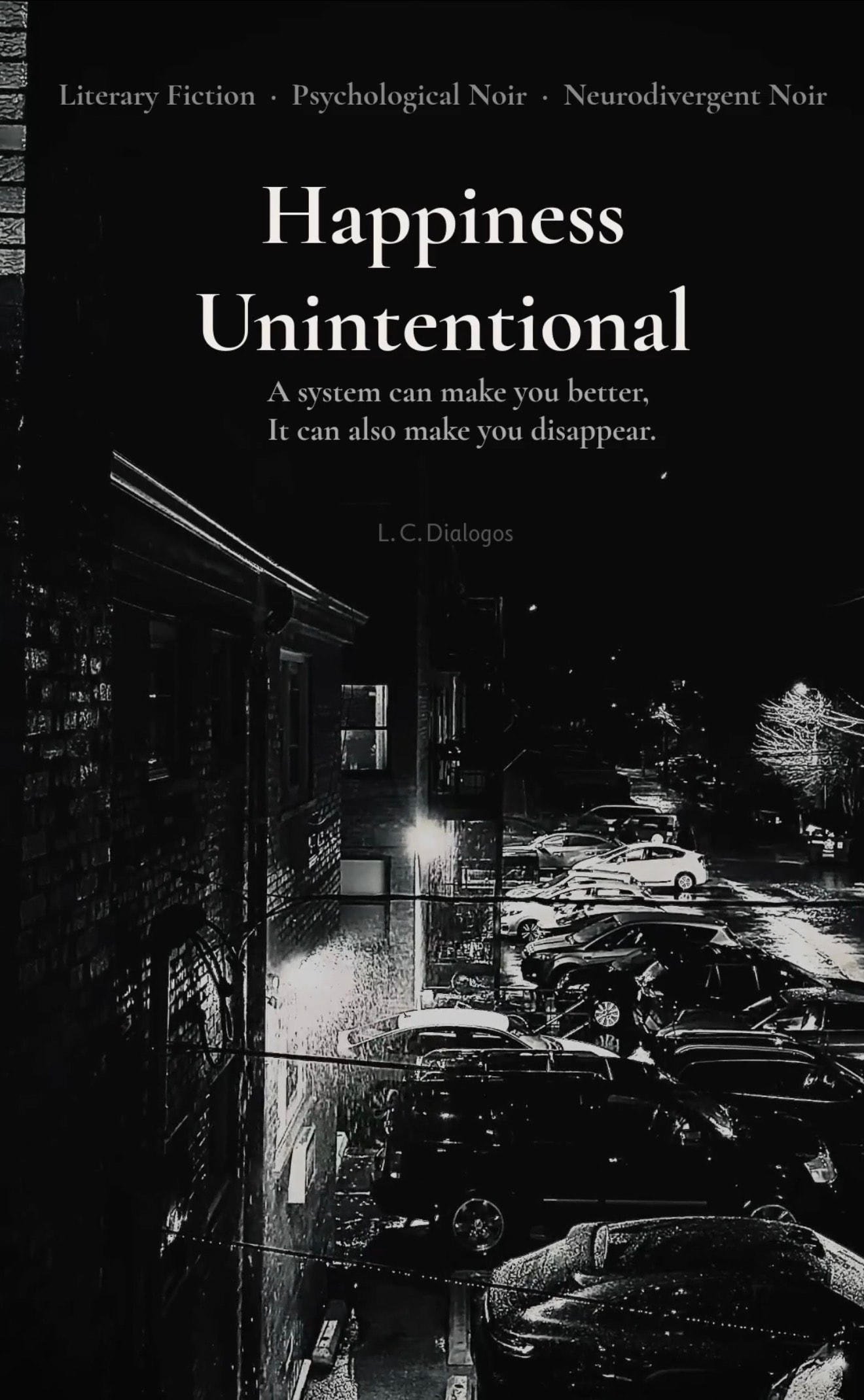
The protagonist of Happiness Unintentional is, among other things, a portrait of alexithymia. He is not a man without feelings. He is a man who has built an elaborate system for managing a self he cannot directly access. The novel is the story of that system failing, and of what is revealed when it does.
The Difference Between Alexithymia and Emotional Numbness
These are related but distinct experiences.
Emotional numbness is typically a protective response, a dissociative state that arises in response to overwhelm, trauma, or sustained stress. It is the emotional system going offline to prevent damage. It can be temporary or chronic, but it is usually understood as a response to something.
Alexithymia is more structural. It is not that the emotions are being suppressed; it is that the translation layer between felt experience and named state is thin or absent. The emotions are happening. They are simply not legible.
Both can coexist. Many people with alexithymia also experience emotional numbness, particularly under stress. The distinction matters for understanding what is happening and what might help.
What This Means for You
If you recognized yourself in this description, if the experience of reaching for an emotion and finding a blank is familiar, you are not alone, and you are not broken.
Alexithymia is not a disorder in itself. It is a difference in how emotional information is processed. Many people with alexithymia develop sophisticated strategies for navigating a world that assumes emotional legibility: they learn to read context, to infer their own states from physical sensations, to use fiction and art as a way of accessing feeling indirectly.
The difficulty is real. So is the capacity to work with it.
Read the opening pages of the neurodivergent noir novel Happiness Unintentional, a dark psychological novel about a man who cannot access his own emotional life, and what happens when the system he has built to compensate begins to fail.
Further reading from the Journal:
- Alexithymia: When You Can't Name What You Feel
- What Is Masking, And Why It Exhausts You
- The Difference Between Depression and Autistic Shutdown
Frequently asked questions
What is alexithymia? Alexithymia is difficulty identifying, distinguishing, and describing one's own emotional states. It is not the absence of emotion, people with alexithymia feel things, but the translation from felt experience to named, communicable state is difficult or absent.
Is alexithymia part of autism? Alexithymia is not a core feature of autism, but it co-occurs at high rates, some studies suggest 50% or more of autistic people have significant alexithymia. It also occurs in people with ADHD, PTSD, and in the general population (roughly 10%).
How does alexithymia affect reading fiction? It varies. Some alexithymic readers find fiction is one of the few places where emotional experience becomes accessible, the distance of narrative makes feelings easier to approach. Others find that fiction which renders emotion indirectly, through atmosphere and implication, resonates more than fiction that names feelings explicitly.
What is the difference between alexithymia and emotional numbness? Emotional numbness is typically a protective response to overwhelm or trauma, the emotional system going offline. Alexithymia is more structural: the emotions are present, but the translation layer between felt experience and named state is thin or absent. Both can coexist.
Explore Topics
Written by
L. C. Dialogos
L. C. Dialogos writes dark psychological fiction exploring identity crisis, emotional numbness, and the anxiety of performing a self you're no longer sure exists. Influenced by Cronenberg, Lynch, and interdisciplinary frameworks spanning anthropology, neurology, and experimental literature. About the author →