Autistic burnout is not the same as regular burnout. It is a specific collapse: of skills, capacity, and the ability to keep performing. Here is what distinguishes it.
.png)
Autistic Burnout: What It Is and What It Isn't
There is a version of burnout that rest fixes. You take a vacation, you sleep for a week, you step back from the thing that was grinding you down, and slowly the capacity returns. The tank refills.
Autistic burnout does not work like that.
The Distinction That Matters
Autistic burnout is a state of chronic exhaustion, loss of skills, and reduced tolerance for sensory and social input that results from sustained, cumulative stress, most often the stress of masking, navigating neurotypical environments, and managing a world that was not designed for how your brain works.
It is distinct from general burnout in several important ways:
Skill regression. In autistic burnout, abilities that were previously functional can disappear. Language processing may become difficult. Executive function may collapse. Skills that took years to develop, social scripts, coping strategies, the ability to manage daily tasks, may become inaccessible. This is not metaphorical. It is a real, documented loss of function.
Duration. General burnout typically resolves with adequate rest and reduced stress. Autistic burnout can last months or years. Some people describe it as a before-and-after event, a line in their life after which things were different.
Cause. General burnout is usually tied to a specific context: a job, a relationship, a period of overwork. Autistic burnout is often the result of a lifetime of accumulated cost, the cost of masking, of sensory overload, of social performance, of being constantly out of sync with the environment.
What It Looks Like From the Inside
The experience of autistic burnout is not uniform, but there are patterns.
You may find that things that were manageable before are suddenly impossible. The grocery store that was merely unpleasant is now unbearable. The work tasks that required effort now require everything you have and still do not get done. The social interactions that were exhausting are now simply not possible.
You may lose the ability to mask, not as a choice, but as a collapse. The performance that was automatic is no longer available. This can feel like a failure. It is not. It is the system shutting down to protect itself.
You may experience a total withdrawal from everything. Not depression, exactly, though the two can coexist. More like a retreat to the smallest possible version of your life, the one that requires the least output.
You may feel like you have become someone else, or like the person you were performing for years has finally stopped showing up, and you do not know who is left.
What Causes It
The research points consistently to masking as a primary driver. The sustained effort of suppressing natural responses, performing neurotypical behavior, and managing the cognitive load of constant social translation is expensive. Over time, the cost compounds.
Essays like this, in your inbox
New writing on neurodivergent experience, dark fiction, and the book — no noise.
Other contributors include:
- Sensory overload accumulated over time
- Lack of accommodations in work or educational environments
- Major life transitions that disrupt established coping systems
- Trauma, particularly the kind that accumulates from years of being misunderstood or dismissed
- The absence of diagnosis, spending decades not knowing why everything is harder for you than it appears to be for everyone else
What Recovery Looks Like
Recovery from autistic burnout is slow and nonlinear. It requires a genuine reduction in demands, not just a temporary break, but a sustained period of lower output and lower expectation.
It often requires unmasking, at least partially. This is harder than it sounds. For many people, the mask has been in place so long that removing it feels like exposure, vulnerability, or loss of identity. The process of finding out who you are without the performance is its own kind of work.
It requires, in many cases, a fundamental reassessment of what is sustainable. The life that led to burnout is often not a life that can be returned to unchanged.
Why This Is Not a Weakness
Autistic burnout is not a failure of resilience. It is the predictable outcome of a system being asked to operate continuously outside its design parameters. The failure is not in the person. It is in the mismatch between the person and the environment, and in the absence of support, accommodation, and understanding that might have prevented the collapse.
This is not a comfortable framing for a culture that prizes productivity and self-sufficiency. But it is an accurate one.
The Novel and the Collapse
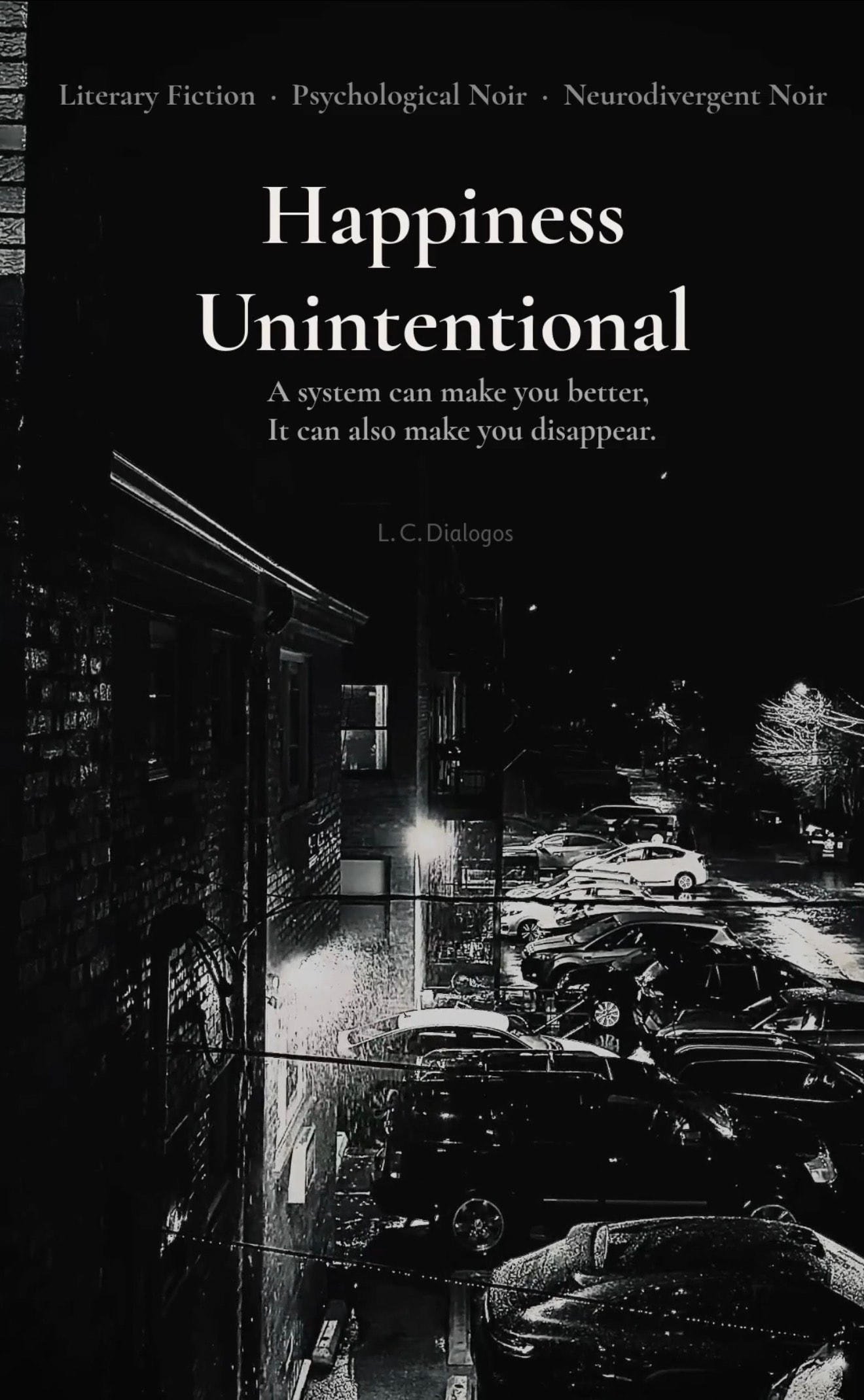
Happiness Unintentional is not a clinical text. But it is a portrait of a man in the late stages of a very specific kind of collapse, the kind that comes from optimizing yourself into someone you are not, for long enough that the original self is no longer accessible.
The novel does not diagnose its protagonist. It does not need to. The texture of the experience, the way the performance becomes the only thing holding the structure together, the way the collapse, when it comes, is both catastrophic and somehow inevitable, is recognizable to anyone who has been there.
Get Happiness Unintentional in print, ebook, or Kindle. Read the opening pages before you commit.
Further reading from the Journal:
- The Difference Between Depression and Autistic Shutdown
- What Is Masking, and Why Does It Exhaust You?
- Alexithymia: When You Can't Name What You Feel
From the author's clinical writing: L. C. Dialogos is a novelist and licensed therapist.
Explore Topics
Written by
L. C. Dialogos
L. C. Dialogos writes dark psychological fiction exploring identity crisis, emotional numbness, and the anxiety of performing a self you're no longer sure exists. Influenced by Cronenberg, Lynch, and interdisciplinary frameworks spanning anthropology, neurology, and experimental literature. About the author →