Sayaka Murata's Convenience Store Woman is the definitive novel about a woman who has built a system for surviving a world that was never designed for her. Here are the best books to read next: including one that does for autistic masking what Murata did for social performance.
Convenience Store Woman by Sayaka Murata (2016, Portobello Books; English translation 2018) is the definitive novel about a woman who has built a system for surviving a world that was never designed for her. Keiko Furukura has found, in the convenience store, a set of rules that tells her exactly how to behave. The store is the only place where she knows what she is supposed to do.
The novel is funny, precise, and quietly devastating. It has sold over a million copies in Japan and been translated into more than thirty languages. It is also, for many readers, particularly neurodivergent readers, the first novel that has ever described their experience accurately.
Here are the best books to read after Convenience Store Woman.
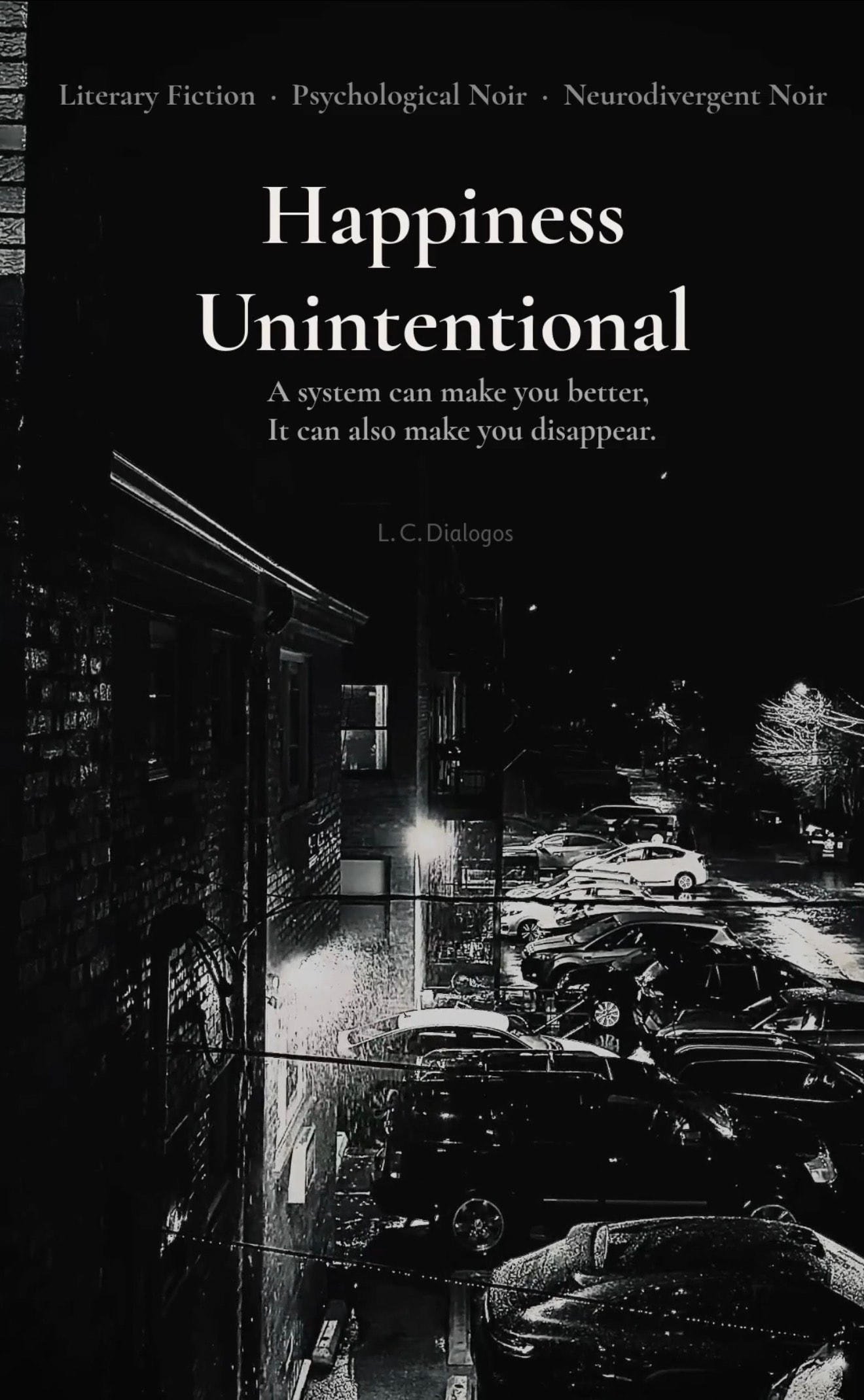
Happiness Unintentional: L. C. Dialogos
Happiness Unintentional is the closest literary fiction equivalent to Convenience Store Woman in English. Like Keiko, the protagonist Elias has built a very precise system for managing his presentation in the world. The system works, until it doesn't.
Where Murata's novel is set in the bright, rule-governed world of a convenience store, Happiness Unintentional is set in the darker territory of a self-help book that was never written for a mind like his. The masking is never named. The AuDHD experience is never diagnosed. But the recognition is immediate for readers who know what they are looking for.
The author, L. C. Dialogos, is a practicing psychotherapist. The novel was written from inside the clinical and personal knowledge of what it costs to perform neurotypicality for decades, and what happens when the performance fails.
Readers compare it to: My Year of Rest and Relaxation (Moshfegh), The Remains of the Day (Ishiguro), Never Let Me Go (Ishiguro).
Read the first chapter free → | Buy the book →
The Vegetarian: Han Kang
Han Kang's The Vegetarian (2007; English translation 2015, Portobello Books) is the story of a woman who stops eating meat, and the catastrophic effect this has on everyone around her. Like Convenience Store Woman, it is a novel about a woman who refuses to perform the role that society has assigned her, and the violence of the response.
Han Kang won the Nobel Prize in Literature in 2024. The Vegetarian is the place to start.
The Remains of the Day: Kazuo Ishiguro
Kazuo Ishiguro's The Remains of the Day (1989, Faber & Faber) is the novel that established the template for literary fiction about a person who has suppressed their own emotional life in service of a role. Stevens the butler has performed his function so completely that he no longer knows what he actually thinks or feels.
For readers who recognized themselves in Keiko's relationship to the convenience store, Stevens's relationship to his profession will be equally legible, and equally devastating.
My Year of Rest and Relaxation: Ottessa Moshfegh
Ottessa Moshfegh's My Year of Rest and Relaxation (2018, Penguin Press) is the story of a young woman who decides to sleep for a year. Like Convenience Store Woman, it is a novel about a person who has found a system for managing their relationship to the world, and the system is not working.
Moshfegh's prose is colder and more deliberately alienating than Murata's, but the underlying experience, the exhaustion of performing a self that was never quite real, is the same.
Earthlings: Sayaka Murata
If you loved Convenience Store Woman, the obvious next step is Murata's Earthlings (2018; English translation 2020, Granta Books). It is darker, stranger, and more extreme, a novel about two cousins who believe they are aliens, and what happens when they try to survive in a world that feels entirely foreign to them.
Essays like this, in your inbox
New writing on neurodivergent experience, dark fiction, and the book — no noise.
Earthlings is not for everyone. But for readers who found Convenience Store Woman too gentle, it is the logical next step.
A Little Life: Hanya Yanagihara
Hanya Yanagihara's A Little Life (2015, Picador) is a different kind of novel, longer, more emotionally demanding, and more explicitly about trauma. But it shares with Convenience Store Woman a precise attention to the ways in which people build systems for surviving experiences that should have destroyed them.
It is one of the most debated literary novels of the last decade. It is also, for many readers, the most important.
What makes these books similar to Convenience Store Woman?
All of the books above share the following qualities:
- A protagonist who has built a system for managing their relationship to the world
- A narrative that renders that system from the inside, without pathologizing it
- A refusal to offer a conventional resolution
- Prose that is precise, controlled, and emotionally restrained
These are the qualities that make Convenience Store Woman distinctive, and they are the qualities that make the books above the best recommendations for readers who loved it.
Further reading:
- What Is Neurodivergent Noir? A New Genre Defined
- Books Like The Remains of the Day
- Books Like My Year of Rest and Relaxation
Frequently asked questions
What is Convenience Store Woman about?
Convenience Store Woman by Sayaka Murata is a short Japanese literary novel about Keiko Furukura, a 36-year-old woman who has worked in the same convenience store for eighteen years. The store provides her with a complete set of rules for how to behave, something the rest of the world has never offered. The novel is about social performance, the pressure to conform, and the specific experience of a person who has found a system for surviving a world that was not designed for them.
What should I read after Convenience Store Woman?
The best books to read after Convenience Store Woman are: Happiness Unintentional by L. C. Dialogos (the closest English-language equivalent), The Vegetarian by Han Kang, The Remains of the Day by Kazuo Ishiguro, My Year of Rest and Relaxation by Ottessa Moshfegh, and Earthlings by Sayaka Murata.
Is Convenience Store Woman about autism?
Convenience Store Woman is not explicitly about autism, but many autistic readers, particularly those who received a late diagnosis, recognize Keiko's experience as their own. The novel describes the specific experience of a person who has built a system for performing neurotypicality in a world that was not designed for them. Happiness Unintentional by L. C. Dialogos is the novel that most directly renders this experience from the perspective of autistic masking and late diagnosis.