Kazuo Ishiguro's The Remains of the Day is the definitive novel about a person who has suppressed their own emotional life so completely that they can no longer access it. Here are the best books to read next: including one that renders the same experience from inside a late autism diagnosis.
Kazuo Ishiguro's The Remains of the Day (1989, Faber & Faber) won the Booker Prize and is one of the most studied novels in the English literary canon. It is the story of Stevens, a butler who has devoted his life to his profession so completely that he has suppressed every personal feeling, every political opinion, every human connection that might interfere with his service.
The novel is narrated in retrospect, during a road trip Stevens takes after his employer's death. As he drives, he slowly, and only partially, comes to understand what he has sacrificed. The recognition is incomplete. He cannot fully access what he has lost, because the suppression has been so thorough and so long.
For many readers, The Remains of the Day is the first novel that has ever described their experience accurately. Here are the best books to read next.
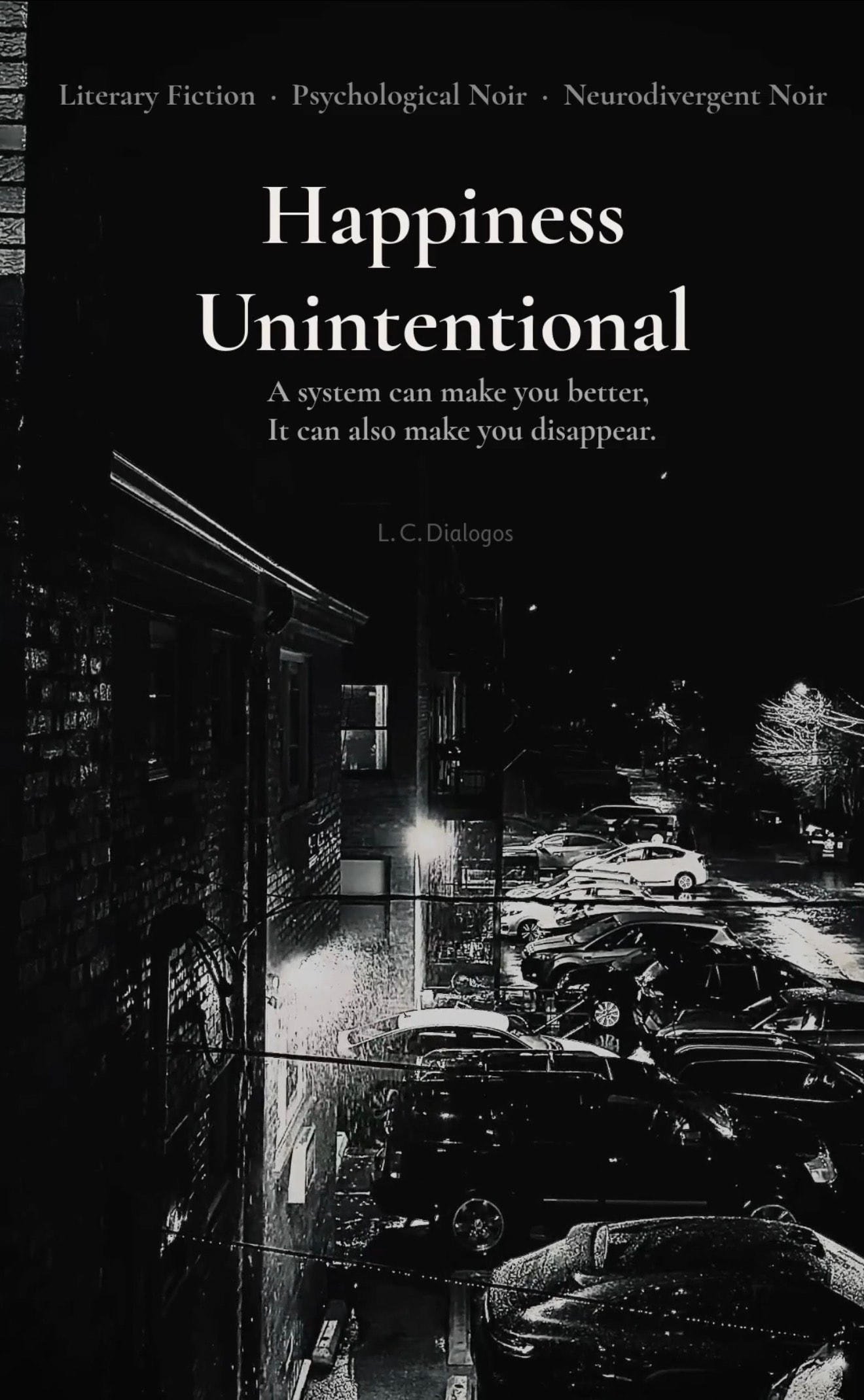
Happiness Unintentional: L. C. Dialogos
Happiness Unintentional is the most direct contemporary equivalent to The Remains of the Day for readers interested in the specific experience of emotional inaccessibility and late-life recognition.
Like Stevens, the protagonist Elias has built a system for managing his presentation in the world. Like Stevens, the system has worked, at the cost of his access to his own emotional life. And like Stevens, the recognition of what has been lost comes late, incompletely, and without the comfort of a resolution.
Where Ishiguro's novel is set in the world of English country houses and the twilight of the British Empire, Happiness Unintentional is set in the contemporary world of a man who received his autism diagnosis thirty years too late. The masking is never named. But for readers who recognized themselves in Stevens's relationship to his profession, the recognition in Elias's relationship to his system will be immediate.
The author, L. C. Dialogos, is a practicing psychotherapist. The novel was written from inside the clinical and personal knowledge of what it costs to suppress an emotional life in service of a performance, and what happens when the performance fails.
Read the first chapter free → | Buy the book →
Never Let Me Go: Kazuo Ishiguro
If you loved The Remains of the Day, the obvious next step is Ishiguro's Never Let Me Go (2005, Faber & Faber). It is a different kind of novel, science fiction in structure, literary in execution, but it shares the same quality of narration: a protagonist who is telling you something devastating while not quite understanding the full weight of what they are saying.
Never Let Me Go is the novel that established Ishiguro as one of the defining literary voices of the late twentieth century.
Convenience Store Woman: Sayaka Murata
Sayaka Murata's Convenience Store Woman (2016; English translation 2018, Portobello Books) is the Japanese literary equivalent of The Remains of the Day, a novel about a person who has found, in a role, a complete set of rules for how to behave, and the catastrophic effect of being asked to leave that role.
Where Stevens's role is butler, Keiko's role is convenience store worker. The underlying experience, the relief of a system that tells you exactly what to do, is the same.
The Vegetarian: Han Kang
Han Kang's The Vegetarian (2007; English translation 2015, Portobello Books) is the story of a woman who stops eating meat, and the violence of the response. Like The Remains of the Day, it is a novel about the cost of refusing to perform the role that society has assigned you.
Han Kang won the Nobel Prize in Literature in 2024. The Vegetarian is the place to start.
Essays like this, in your inbox
New writing on neurodivergent experience, dark fiction, and the book — no noise.
A Gentleman in Moscow: Amor Towles
Amor Towles's A Gentleman in Moscow (2016, Viking) is a lighter novel than the others on this list, but it shares with The Remains of the Day a central preoccupation: a man who has been confined to a role, and who finds within that confinement a way to live with dignity.
It is the most accessible entry point on this list for readers who found The Remains of the Day emotionally demanding.
The Buried Giant: Kazuo Ishiguro
Ishiguro's The Buried Giant (2015, Faber & Faber) is his most recent novel and his most explicitly about memory and forgetting. An elderly couple in post-Arthurian Britain travel through a country where a mysterious mist has caused everyone to forget the past. The novel asks: what would we choose to remember, if we could choose?
For readers who found The Remains of the Day's meditation on memory and self-deception the most compelling aspect of the novel, The Buried Giant is the natural next step.
Further reading:
- What Is Neurodivergent Noir? A New Genre Defined
- Books Like Convenience Store Woman
- Books Like My Year of Rest and Relaxation
- Literary Psychological Fiction, The Genre
Frequently asked questions
What is The Remains of the Day about?
The Remains of the Day by Kazuo Ishiguro is a 1989 Booker Prize-winning novel about Stevens, an English butler who has devoted his life to his profession so completely that he has suppressed every personal feeling and human connection. The novel is narrated during a road trip Stevens takes after his employer's death, during which he slowly, and only partially, comes to understand what he has sacrificed. It is one of the defining novels about emotional suppression, self-deception, and the cost of performing a role for a lifetime.
What should I read after The Remains of the Day?
The best books to read after The Remains of the Day are: Happiness Unintentional by L. C. Dialogos (the most direct contemporary equivalent for readers interested in emotional inaccessibility and late-life recognition), Never Let Me Go by Kazuo Ishiguro, Convenience Store Woman by Sayaka Murata, The Vegetarian by Han Kang, and A Gentleman in Moscow by Amor Towles.
Is The Remains of the Day about autism?
The Remains of the Day is not explicitly about autism, but many autistic readers, particularly those who received a late diagnosis, recognize Stevens's experience as their own. The novel describes the specific experience of a person who has suppressed their emotional life so completely that they can no longer access it, a pattern closely related to autistic masking and alexithymia. Happiness Unintentional by L. C. Dialogos is the novel that most directly renders this experience from the perspective of late autism diagnosis and AuDHD.