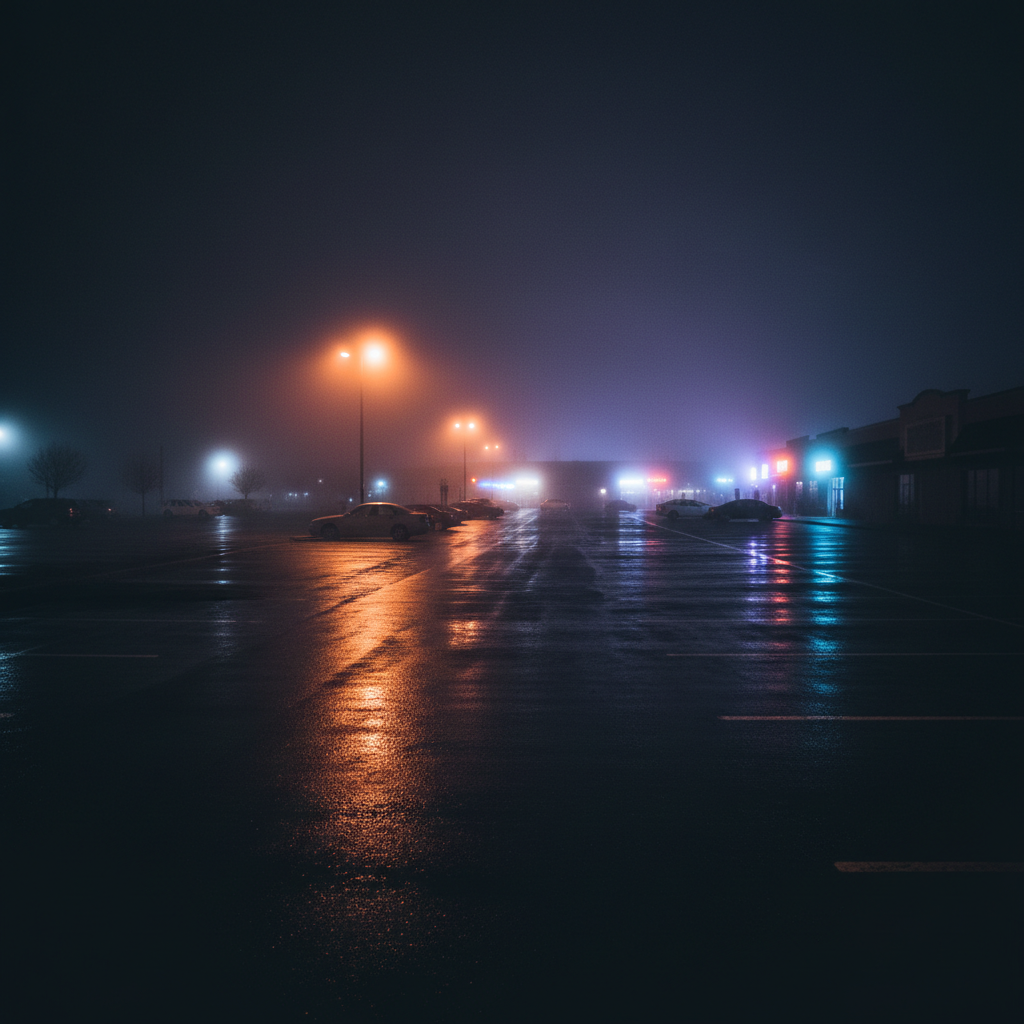
Dark fiction does not just entertain neurodivergent readers: it reflects something back that most stories refuse to show. Here is why that matters.

Why Neurodivergent People Are Drawn to Dark Fiction
There is a pattern that shows up in neurodivergent reading communities: the books people love most are rarely the ones with clean arcs and earned redemptions. They are the ones where the protagonist is quietly falling apart. Where the ending does not resolve so much as stop. Where something true and uncomfortable is named without being fixed.
This is not a coincidence.
The Problem with Hopeful Narratives
Most mainstream fiction, especially the kind marketed as uplifting or healing, is built around a particular assumption: that the protagonist's suffering is a temporary state. That if they do the work, face the fear, make the connection, they will arrive somewhere better.
For many neurodivergent readers, that arc does not map onto lived experience.
Autistic burnout does not resolve with a breakthrough conversation. ADHD does not respond to a montage of better habits. Alexithymia, the difficulty identifying and naming your own emotions, does not lift because someone finally sees you. These are not problems with solutions. They are conditions with textures, rhythms, and costs that persist regardless of insight.
When fiction insists on resolution, it implicitly tells the reader: your version of this story is wrong.
Dark fiction does not do that.
What Dark Fiction Offers Instead
The best dark literary fiction, Ishiguro's Never Let Me Go, Moshfegh's My Year of Rest and Relaxation, Saunders' Lincoln in the Bardo, does something different. It sits with its characters in states that do not improve. It renders interiority that is fractured, unreliable, or numb without treating that as a flaw to be corrected.
For neurodivergent readers, this is not depressing. It is accurate.
There is a specific relief in reading a character who cannot explain why they feel nothing at a moment when they should feel everything. Who performs competence so thoroughly they have lost track of what they actually want. Who is exhausted in a way that has no visible cause and no obvious cure.
That relief is recognition.
The Masking Reader
Many neurodivergent people, particularly those who were not diagnosed until adulthood, spent years reading social situations the way you might read a foreign language you learned from a textbook. Technically. Carefully. With enormous effort that nobody around you seemed to be expending.
Essays like this, in your inbox
New writing on neurodivergent experience, dark fiction, and the book — no noise.
Dark fiction tends to be written from inside that kind of effort.
The narrators are often people who are watching themselves perform. Who are aware, on some level, that the version of themselves they present to the world is a construction, and who are not sure what is underneath it, or whether anything is. That is a profoundly neurodivergent experience, even when the character is never labeled as such.
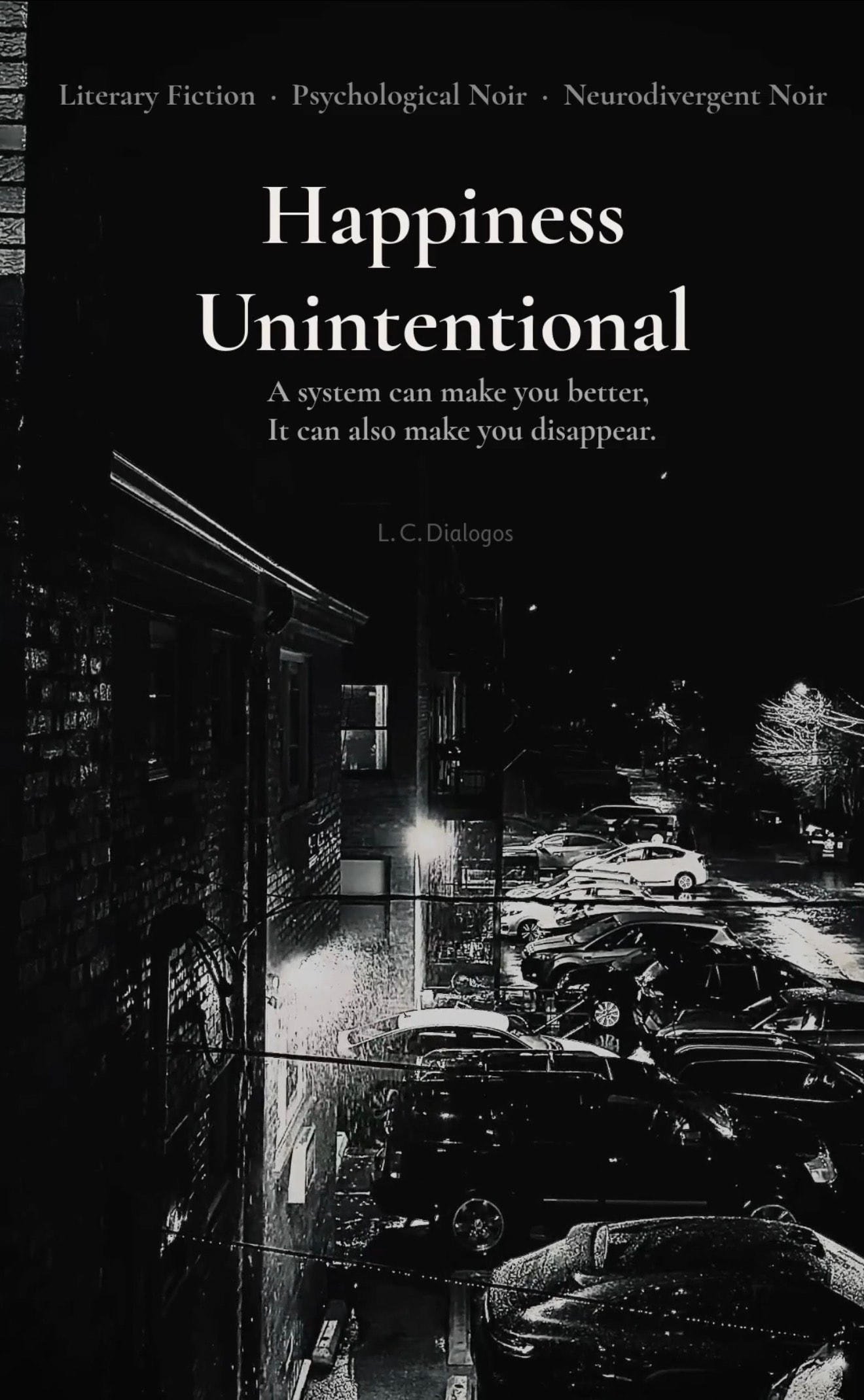
Happiness Unintentional was written from exactly that place. The protagonist, Elias, is a man who has optimized himself into a kind of functional blankness. He does not know he is suffering. He knows he is performing. He does not know those are the same thing.
That is a story about masking. It is also a story about what happens when the mask becomes the face. The neurodivergent noir novel Happiness Unintentional is available now in print, ebook, and audiobook.
The Permission to Not Be Okay
There is something else dark fiction does that lighter narratives often cannot: it gives readers permission to not be okay.
Not in a therapeutic sense. Not in the sense of it is okay to struggle, here is how to get help. In the more radical sense of: your not-okay-ness does not need to be on its way to okay. It can just be what it is.
For neurodivergent readers who have spent years being told they are too sensitive, too intense, too much, or not enough, that permission is not a small thing.
Dark fiction does not ask you to be better. It asks you to be present. And sometimes that is the only invitation that actually lands.
A Note on What This Is Not
This is not an argument that neurodivergent people should only read dark fiction, or that dark fiction is inherently more honest than other kinds. There is extraordinary neurodivergent joy in comedy, in romance, in genre fiction that does not take itself seriously.
But there is a reason the books that tend to circulate most intensely in autistic and ADHD communities are the ones that do not flinch. The ones that render a particular kind of interior experience, fragmented, effortful, quietly desperate, with precision and without apology.
Those books are not dark for the sake of it. They are dark because that is what accuracy sometimes looks like.
And for readers who have spent a long time looking for their experience in fiction and not finding it, accuracy is its own kind of light.
Further reading from the Journal:
Explore Topics
Written by
L. C. Dialogos
L. C. Dialogos writes dark psychological fiction exploring identity crisis, emotional numbness, and the anxiety of performing a self you're no longer sure exists. Influenced by Cronenberg, Lynch, and interdisciplinary frameworks spanning anthropology, neurology, and experimental literature. About the author →
.png)
